
Home >

Recycling Tips for Eco-Friendly Homes

Recycling Tips for Eco-Friendly Homes

Recycling Tips for Eco-Friendly Homes
Lila Greenfield | 2026-04-10

As eco-conscious homeowners, we have the power to make a significant difference in our communities and the planet. By understanding and implementing sustainable waste management practices, we can minimize our environmental impact and lead more eco-friendly lives. Ready to discover practical strategies for a greener home?

What You Will Learn

  • Learn the essential recycling principles, including how to prepare materials properly for effective recycling.
  • Discover effective waste segregation techniques to increase successful recycling rates at home.
  • Explore various composting methods to transform kitchen scraps into nutrient-rich soil for gardening.
  • Find out how to minimize single-use items in daily life to significantly reduce landfill waste.
  • Understand the difference between compostable and non-compostable materials to enhance your composting efforts.
  • Engage with community recycling initiatives and participate in local programs to foster sustainable habits.
  • Get inspired by zero-waste challenges that make sustainability a fun and family-friendly activity.
  • Learn how to measure the impact of your sustainable choices to empower yourself and motivate others.

Key Recycling Strategies for Eco-Friendly Living

These are some effective strategies to enhance recycling efforts in your home, ensuring sustainability and reducing waste.

Recycling Basics

Understand what can be recycled and how to prepare materials correctly:

  • Plastics: Rinse containers and check recycling symbols.
  • Glass: Clean bottles and jars; remove lids.
  • Paper: Keep paper dry and flatten cardboard.
  • Metals: Ensure cans are empty and rinsed.

Waste Segregation Techniques

Implement these techniques to improve your waste management:

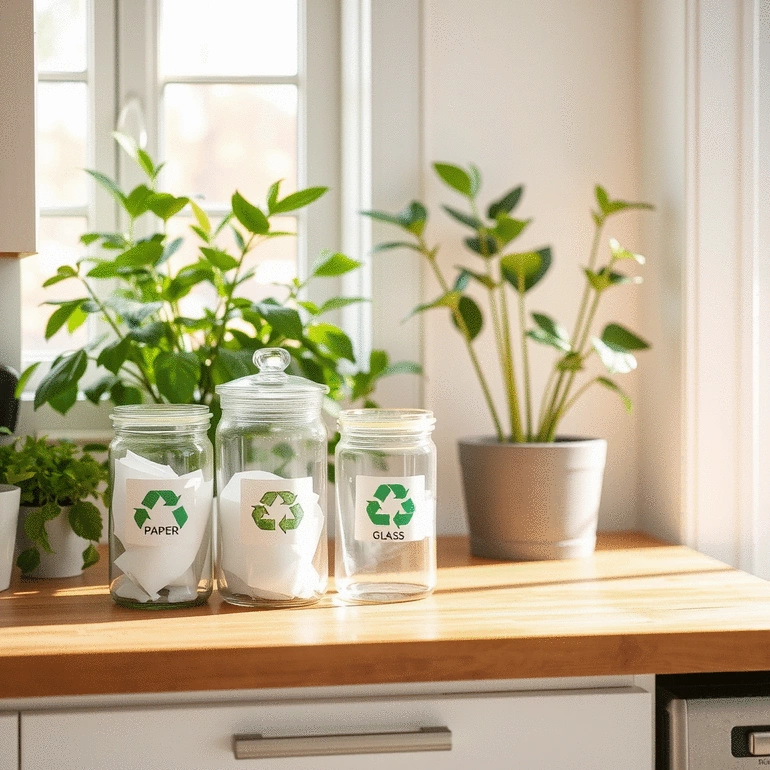
  • Designate separate bins for recyclables, compost, and trash.
  • Label bins clearly to avoid confusion.
  • Set reminders to check and empty bins regularly.

Composting Methods

Transform kitchen scraps into nutrient-rich soil with these methods:

  • Bokashi method: Ferment even meat and dairy.
  • Vermicomposting: Use worms to break down organic matter.
  • Traditional composting: Pile up kitchen scraps and yard waste.

Minimize Single-Use Items

Reduce reliance on disposables with these tips:

  • Use reusable bags for shopping.
  • Opt for stainless steel or glass containers.
  • Choose cloth napkins over paper towels.

Practical Strategies for Sustainable Home Waste Management

As eco-conscious homeowners, we have the power to make a true difference in our communities and the planet. Recycling plays a crucial role in this journey. By understanding its importance, we can significantly reduce waste and minimize the environmental impact of our daily lives. In fact, recycling helps conserve natural resources, saves energy, and reduces greenhouse gas emissions. At GreenRubbish Group, we believe that every small action can lead to more sustainable living! For more tips on reducing waste, check out our guide on reducing landfill waste together.

Understanding Recycling Basics for Eco-Friendly Homeowners

To start off, let’s dive into some basic recycling principles that every homeowner should know. First, it's vital to understand what materials can be recycled and how they should be prepared before placing them in your recycling bin. This ensures that the recycling process is efficient and effective.

  • Plastics: Check for recycling symbols and rinse containers before recycling.
  • Glass: Clean bottles and jars are a must—remove any lids!
  • Paper: Flatten cardboard boxes and keep paper dry.
  • Metals: Cans should be empty and rinsed.

By following these guidelines, you not only enhance recycling efforts but also help keep our environment cleaner! It’s all about taking those extra steps to ensure we are doing our part.

Effective Waste Segregation Techniques

Another essential strategy is effective waste segregation. Sorting your materials properly can increase the amount of waste that is successfully recycled. Here’s a simple approach to help you keep things organized:

  • Designate bins: Have separate containers for recyclables, compost, and trash.
  • Label your bins: Clearly mark each bin to avoid confusion.
  • Set reminders: Create a routine to check and empty bins regularly.

Implementing these techniques can transform the way you handle waste at home. When we take responsibility for our waste, we contribute to a more sustainable future!

Composting: Transforming Kitchen Waste into Nutrient-Rich Soil

Composting is another fantastic way to manage waste sustainably. By recycling kitchen scraps and yard waste, we can create nutrient-rich soil for our gardens. This not only reduces landfill waste but also fosters healthy plant growth. Let me share some easy composting methods:

  • Bokashi method: A fermentation process that allows you to compost even meat and dairy.
  • Vermicomposting: Using worms to break down organic matter into rich compost.
  • Traditional composting: Piling up kitchen scraps and yard waste to decompose over time.

By embracing composting, you not only reduce waste but also enrich your garden soil, making your outdoor space thrive with life! To learn more about eco-friendly practices, visit our article on recycling partnerships for eco-friendly businesses.

Minimizing Single-Use Items in Daily Life

Minimizing single-use items is another practical strategy for eco-friendly living. Disposable products contribute massively to landfill waste, so it’s time we rethink our choices. Here are some straightforward tips to help you reduce reliance on disposables:

  • Invest in reusable bags: Bring your own bags for shopping.
  • Opt for stainless steel or glass: Use reusable containers for food and drinks.
  • Choose cloth napkins: Say goodbye to paper towels!

Making these small changes in our daily routines can lead to big impacts on our waste production. At GreenRubbish Group, we’re passionate about promoting these practices because they truly make a difference!

Understanding Organic Waste and Compostable Materials

Finally, understanding organic waste and compostable materials can elevate your composting efforts. Knowing what can and cannot be composted is key to a thriving compost pile. Here’s a quick list to guide you:

  • Compostable materials: Fruit and vegetable scraps, coffee grounds, eggshells, and grass clippings.
  • Non-compostable materials: Meat, dairy, and oily foods should be avoided.
  • Yard waste: Leaves and small branches can enhance your compost mix.

By incorporating this knowledge, you can maximize your composting efforts, leading to more effective waste management at home. Remember, every bit of composting contributes to a healthier planet!

Frequently Asked Questions (FAQs)

Homeowners should know how to prepare common recyclables like plastics (rinse, check symbols), glass (clean, remove lids), paper (keep dry, flatten cardboard), and metals (empty, rinse cans). Proper preparation ensures efficient recycling.

To improve waste segregation, designate separate, clearly labeled bins for recyclables, compost, and general trash. Setting regular reminders to check and empty these bins also helps maintain organization.

Effective composting methods include the Bokashi method (ferments meat and dairy), vermicomposting (uses worms to break down organic matter), and traditional composting (piling kitchen scraps and yard waste).

Minimize single-use items by using reusable shopping bags, opting for stainless steel or glass containers for food and drinks, and choosing cloth napkins instead of paper towels.

Compostable materials include fruit and vegetable scraps, coffee grounds, eggshells, and grass clippings. Non-compostable materials that should be avoided in compost are meat, dairy, and oily foods.

Engaging Community and Staying Informed on Recycling Practices

Engaging with your community and staying informed are vital steps towards effective recycling and sustainable living. With the right information, we can make smarter choices that benefit the planet. Have you ever wondered how many resources you could save just by understanding your local recycling rules? It’s easier than you think! For instance, if you're looking for effortless rubbish removal tips, understanding local guidelines is key.

Several innovative apps have emerged to help us navigate the complexities of recycling in our communities. For instance, these apps not only clarify what can and cannot be recycled but also provide details on collection schedules and nearby drop-off centers. With tools like these, you can become a recycling expert in no time!

  • Recycling Coach: Offers personalized recycling tips based on your location.
  • iRecycle: Connects you with local recycling locations and provides information on recyclable materials.
  • Waste Wizard: Helps you search for specific items and learn how to dispose of them responsibly.

Community Recycling Initiatives: Getting Involved

Your community is a powerful ally in the quest for sustainability! Local recycling initiatives not only help reduce waste but also foster a sense of togetherness. By participating in community programs, you can contribute to a more eco-conscious neighborhood.

Here are some exciting ways to get involved:

  • Join a community garden to promote local food production and composting.
  • Participate in neighborhood clean-up events to beautify shared spaces.
  • Attend workshops on recycling and sustainability to learn new techniques.

At GreenRubbish Group, we believe in the power of community. By collaborating with local organizations, we can amplify our message of sustainability and responsible waste management!

Zero-Waste Challenges: Encouraging Sustainable Habits

Have you ever thought about taking on a zero-waste challenge? These challenges are fantastic ways to make sustainability a fun family affair! Not only do they encourage eco-friendly practices, but they also help you discover new habits that can greatly reduce waste. Speaking of waste, it's important to remember to recycle your electronics the right way to prevent harmful materials from entering landfills.

Here are some engaging ideas for zero-waste challenges you can try:

  • Plastic-Free Week: Aim to avoid all single-use plastics for a week.
  • Clothing Swap Party: Organize an event where friends can exchange clothes instead of buying new ones.
  • Composting Challenge: Try to compost all organic waste for a month and track how much you save from the landfill!

As you embark on these challenges, you’ll not only reduce waste, but you’ll inspire others in your community to join the movement as well!

Summarizing Effective Recycling Strategies and Next Steps

Measuring the Impact of Your Sustainable Choices

Tracking your recycling and composting efforts can be eye-opening! By measuring the impact of your choices, you can understand just how much waste you’re diverting from landfills. Plus, it’s a great way to celebrate your progress and motivate others.

Consider keeping a simple journal or using an app to log your recycling activities. This method allows you to notice trends, recognize successes, and identify areas for improvement. Every little action counts, and seeing your progress can be incredibly empowering!

Call to Action: Start Making Eco-Friendly Changes Today

Let’s make a difference together! I encourage you to implement at least one recycling tip from this article. Whether it’s downloading a recycling app or participating in a local initiative, every action matters. Don’t forget to share your experiences with friends and family to inspire them to join the journey towards sustainability!

As we work together at GreenRubbish Group, we’re excited to see how our collective efforts can lead to a greener, cleaner future for everyone. Let’s get started today!

Recap of Key Points

Here is a quick recap of the important points discussed in the article:

  • Recycling Basics: Understand what materials can be recycled and prepare them properly to enhance efficiency.
  • Effective Waste Segregation: Designate separate bins for recyclables, compost, and trash, and label them clearly.
  • Composting Benefits: Transform kitchen scraps and yard waste into nutrient-rich soil using methods like Bokashi, vermicomposting, or traditional composting.
  • Minimize Single-Use Items: Invest in reusable bags, containers, and cloth napkins to reduce reliance on disposables.
  • Understanding Organic Waste: Know what can be composted (e.g., fruit scraps) versus what should be avoided (e.g., meat and dairy).
  • Engage with Community: Participate in local recycling initiatives and workshops to foster sustainability.
  • Take on Zero-Waste Challenges: Engage in fun challenges like Plastic-Free Week to encourage sustainable habits.
  • Measure Your Impact: Track your recycling efforts to understand and celebrate your progress.
Subscribe & Share

About GreenRubbish Group

We are dedicated to transforming waste management through sustainable practices that protect our planet. Join us in our mission to educate and empower communities for a greener future.