
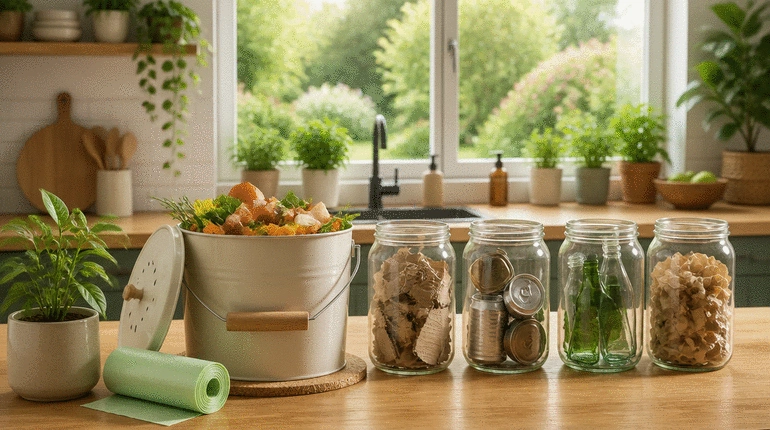
Rethinking waste disposal can transform your home and the planet. Rather than viewing rubbish as a mere inconvenience, consider the substantial impact your disposal choices have on the environment. By embracing eco-conscious practices, homeowners can play a pivotal role in nurturing a healthier ecosystem for future generations!
Understanding the various eco-friendly waste management practices can help homeowners significantly reduce their environmental footprint. Below is a visual representation of the waste hierarchy and the benefits of adopting these sustainable practices. For more tips on reducing waste, check out our guide on reducing landfill waste together.
Have you ever thought about the journey of your rubbish? How it goes from your home to somewhere far away, often with little regard for the harm it can do to our environment? This is where eco-friendly waste disposal comes into play, and it’s vital for protecting our planet. When we choose sustainable practices, we not only reduce waste but also contribute to a healthier ecosystem for future generations!
Eco-friendly waste disposal involves methods that prioritize the health of our environment. This means recycling materials, composting food scraps, and properly disposing of hazardous waste. By adopting these practices, we can significantly reduce landfill contributions and minimize pollution, making every homeowner a crucial part of the solution.
So, what does eco-friendly waste disposal really mean? Essentially, it’s about making choices that lessen our environmental impact. Here are some key methods to consider:
By implementing these methods, we can contribute to a more sustainable future! At GreenRubbish Group, we believe that every small step counts towards making a big difference.
Understanding the waste hierarchy is crucial for homeowners looking to make eco-conscious decisions. This model prioritizes waste management practices in a way that encourages sustainability. The hierarchy consists of five key levels:
By following this hierarchy, homeowners can significantly lessen their environmental impact. Remember, the goal is to prioritize prevention and reuse whenever possible!
Have you heard about the zero waste movement? It’s an inspiring approach that aims to minimize waste by rethinking how we consume and dispose of items. Here are some principles to guide you:
Implementing these principles in your daily life can seem challenging, but it’s about making small, manageable changes. At GreenRubbish Group, we’re here to support you on your path to a more sustainable lifestyle!
Now that we’ve covered the basics of eco-conscious waste disposal, let’s dive into practical strategies. Setting up a household waste management plan can make a significant difference in how you handle rubbish. For effortless disposal, consider these effortless rubbish removal tips.
By creating an effective waste sorting system, you’ll know exactly where to place different items. This not only keeps your space organized but also ensures that recyclables and compostable materials are handled properly!
Here's a brief recap of the key points discussed so far:
When we talk about eco-conscious waste management, it’s not just about doing something good; it’s about making a measurable difference! By effectively sorting and managing our waste, we can significantly reduce the amount that ends up in landfills. Imagine the positive impact on our planet when we all commit to these practices! Plus, there are potential cost savings for homeowners that can’t be ignored.
One key way to see these benefits is through calculating landfill reduction. Every item you recycle or donate means less trash going to the dump. Not only does this help the environment, but it can also reduce disposal costs for households. At GreenRubbish Group, we emphasize the importance of tracking these metrics, as it allows homeowners to see the tangible benefits of their eco-friendly choices!
To effectively measure your impact, it’s essential to keep track of what you’re recycling versus what you’re throwing away. You can start by keeping a simple log of your waste for a week. Once you have an idea of your current habits, aim to set specific goals for reducing landfill contributions.
Here’s a quick checklist to help you get started with calculating your waste savings:
By taking these steps, you'll be able to see how your efforts can lead to a cleaner community and a healthier planet.
It might seem like sorting your waste takes extra time, but in the long run, it actually saves you time! Efficient waste management practices streamline the disposal process, making it easier to know where each item goes. You won't be scrambling to figure out what can be recycled or thrown away, and this can really simplify your day-to-day routine.
Here are some benefits of a well-organized waste sorting system:
At GreenRubbish Group, we believe that a little organization goes a long way in promoting sustainable living!
Engaging in community clean-up events is another fantastic way to measure your impact! Not only are you making your local area cleaner, but these initiatives also foster a sense of community and shared responsibility. Participating in clean-ups shows that you care about both your neighborhood and the environment. Learn more about landfill diversion and community wellbeing and how you can contribute.
Here’s why joining a community clean-up is beneficial:
So, gather your friends or family and check out local opportunities to get involved. You’ll not only make a difference but also inspire others to join the movement!
As we wrap up, I encourage you to take a moment to assess your current waste disposal methods. Are there areas where you can improve? Remember, every small change adds up to a significant impact. At GreenRubbish Group, we believe every homeowner can make a difference, and it all starts with a commitment to sustainability.
Why not start your eco-conscious journey today? Take a step back and evaluate how you manage waste in your home. Remember, the key is to reduce, reuse, and recycle effectively!
Share your journey with others and inspire them to follow suit. Together, we can create a cleaner, greener future for our communities and our planet!
To help you on your sustainable journey, here are some valuable resources you may find helpful:
Explore these links to further educate yourself and find local services that align with your eco-friendly goals!
Lastly, let’s talk about eco-labeling. When shopping, be mindful of products that are labeled as eco-friendly. These labels often indicate that the product meets certain environmental standards. By choosing these products, you’re not only supporting sustainable practices, but you’re also making informed choices that benefit the planet!
As always, remember that every decision you make has an impact. By staying informed and making conscious choices, we can collectively move towards a more sustainable future. Happy eco-conscious living!
Here is a quick recap of the important points discussed in the article: